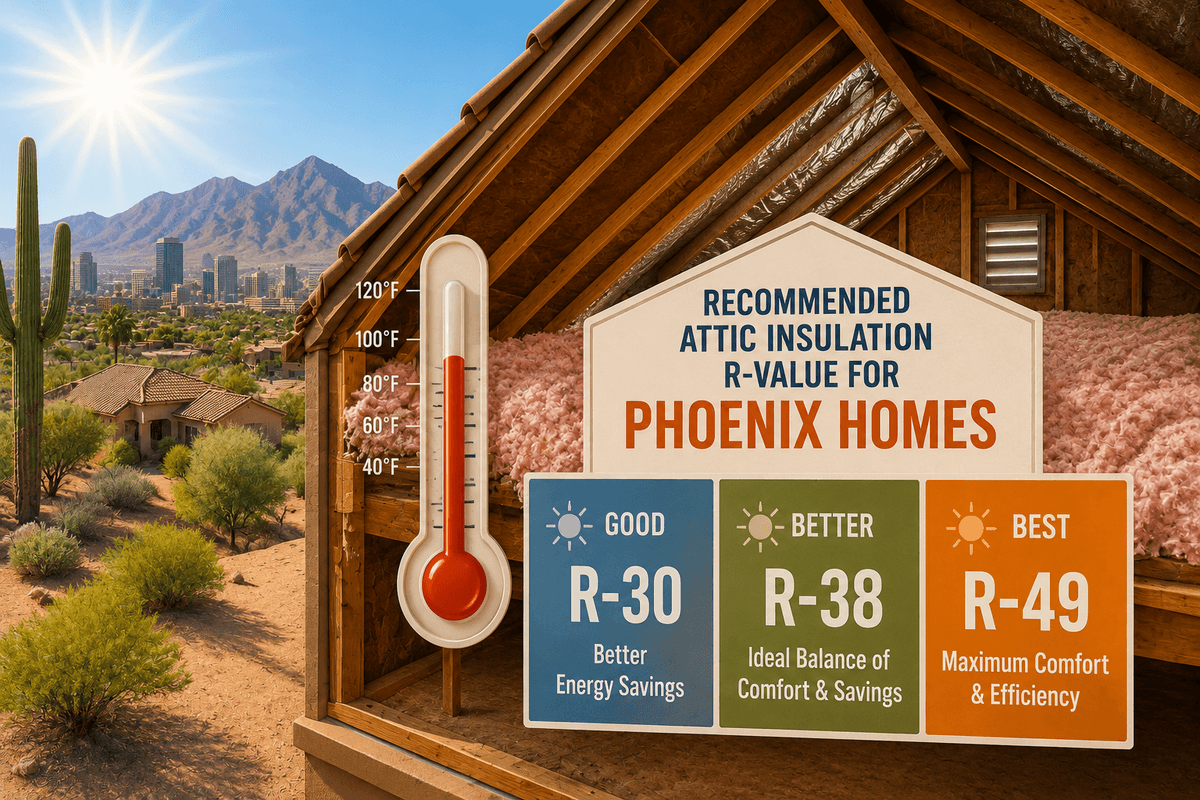
Insulation is your Phoenix home's first line of defense against relentless desert heat, and its R-value is the number that decides how well it holds the line. Get it right and your cooling system gets a break all summer. Get it wrong and you pay for it every month.
This guide walks Phoenix homeowners through the attic R-value question: what Arizona code requires, why the extreme heat often calls for more, how your insulation material factors in, and why air sealing has to come first.
Key Takeaways
- Arizona code sets a minimum of R-38 for attic insulation.
- In Phoenix heat, R-49 or higher often pays off in lower cooling bills.
- The right R-value depends on your attic, your material, and air sealing.
Why R-Value Matters More in Phoenix
R-value measures how well insulation resists heat flow. A higher number means better resistance. In a desert attic, that resistance is your first defense against the heat.
Summer attic temperatures here can soar past 140 degrees. Without enough insulation, that heat pours into your rooms. Your air conditioner then runs nonstop to keep up.
The R-Value Your Phoenix Attic Needs
Arizona building code sets the floor at R-38 for attics. That is the minimum, not the ideal. Many local homes do better at R-49 or higher.
National guidance backs this up for hot climates. The ENERGY STAR recommended insulation levels point to roughly R-38 to R-60 for a region like ours.
Why Higher R-Value Pays Off Here
The cooling season here is long and intense. Every degree the attic blocks eases the load on your system. Over a summer, that adds up to real savings.
Attic heat is part of a bigger urban heat story. The EPA notes how trapped heat drives up cooling demand, and a well-insulated attic is one of the best answers.
R-Value Depends on the Material
Different insulation reaches R-value in different ways. Blown fiberglass and cellulose build R-value through depth. Spray foam does it in a thinner layer.
Open cell spray foam runs about R-3.5 per inch. Closed cell is denser and higher per inch. That is why foam can hit target R-value without a deep pile of material.
Air Sealing Comes First
R-value only works if the air is not leaking. Gaps around lights, ducts, and the attic hatch let heat pour through. Insulation over a leaky attic underperforms.
That is why Optima SprayFoam seals the leaks before adding insulation. Seal first, then build the R-value on top. The two together are what actually lower your bill.
Signs Your Attic Is Under-Insulated
Your home tells you when the attic is short on insulation. Watch for these signs at home.
- Rooms that never quite cool down in summer.
- An air conditioner that runs almost constantly.
- Uneven temperatures from room to room.
- Cooling bills that climb every summer.
How Attic Heat Reaches Your Rooms
Heat moves from hot to cold, always. A blazing attic pushes heat down into your living space. Insulation slows that transfer. The higher the R-value, the slower the heat gets in.
Blown Insulation vs. Spray Foam
Both can hit a target R-value. Blown fiberglass and cellulose rely on depth. Spray foam reaches R-value in a thinner layer and seals air. The best choice depends on your attic.
Radiant Heat and the Arizona Sun
The Arizona sun loads a roof with radiant heat. That heat radiates down into the attic all day. Insulation and air sealing block most of it. Some homes add a radiant barrier for extra help.
Ductwork in a Hot Attic
Many Phoenix homes run ducts through the attic. In a 140-degree attic, those ducts gain heat fast. Sealing and insulating them protects your cool air. It is an easy win alongside attic insulation.
When to Add vs. Replace Insulation
Sometimes you can simply add more on top. Other times the old insulation must come out first. Contamination, moisture, or settling changes the plan. An inspection tells you which path fits.
How R-Value Adds Up
Layers of insulation combine their R-values. Adding six inches of blown material raises the total. Reaching R-49 from R-30 is a common upgrade. The goal is a continuous, even blanket.
The Payback on Better Insulation
Insulation is one of the steadier home investments. Lower cooling bills return the cost over time. In Phoenix, the long season speeds that payback. The comfort gain starts on day one.
Common Attic Insulation Mistakes
A few errors undercut a good attic. Blocking soffit vents chokes airflow. Compressing insulation lowers its R-value. Skipping air sealing wastes much of the benefit.
Ventilation Works With Insulation
A vented attic and good insulation are partners. Airflow carries away heat and moisture. Insulation blocks what is left from entering the home. Both are needed for a comfortable house.
Getting an Attic Assessment
A professional assessment removes the guesswork. The tech measures your current R-value. They check for leaks, gaps, and duct issues. Then they recommend a target that fits your home.
Insulation and Home Value
Efficient insulation is a quiet selling point. Buyers notice low utility bills. A documented attic upgrade adds confidence. It is comfort now and value later.
Timing Your Insulation Project
The best time to insulate is before peak summer. Spring work means comfort when the heat arrives. It also spreads the job out from the busy season. Planning ahead gets you a calmer install and a cooler home.
Frequently Asked Questions
What R-value does a Phoenix attic need?
Arizona code requires a minimum of R-38. Many local homes do better at R-49 or higher. The extreme heat makes the extra insulation worthwhile.
Is R-60 attic insulation worth it in Phoenix?
It can be, given the long cooling season. Higher R-values ease the load on your air conditioner. That often shows up as lower summer bills.
Does spray foam have a high R-value?
Closed cell foam has a high R-value per inch. Open cell runs about R-3.5 per inch. Foam also seals air leaks as it insulates.
Why does air sealing matter?
Insulation cannot stop air that leaks around it. Gaps let heat bypass the insulation. Sealing first makes the R-value actually work.
How do I know if I need more insulation?
Watch for hot rooms and a constantly running air conditioner. Rising summer bills are another clue. An attic inspection confirms your current R-value.
Get Your Phoenix Attic to the Right R-Value
The right attic R-value is one of the best defenses against Phoenix heat. Hit the target, seal the leaks, and your cooling system finally gets a break. Guessing at it usually means paying for it all summer.
Optima SprayFoam can check your current R-value and close the gap. See the Phoenix areas we serve, then reach out for an assessment.