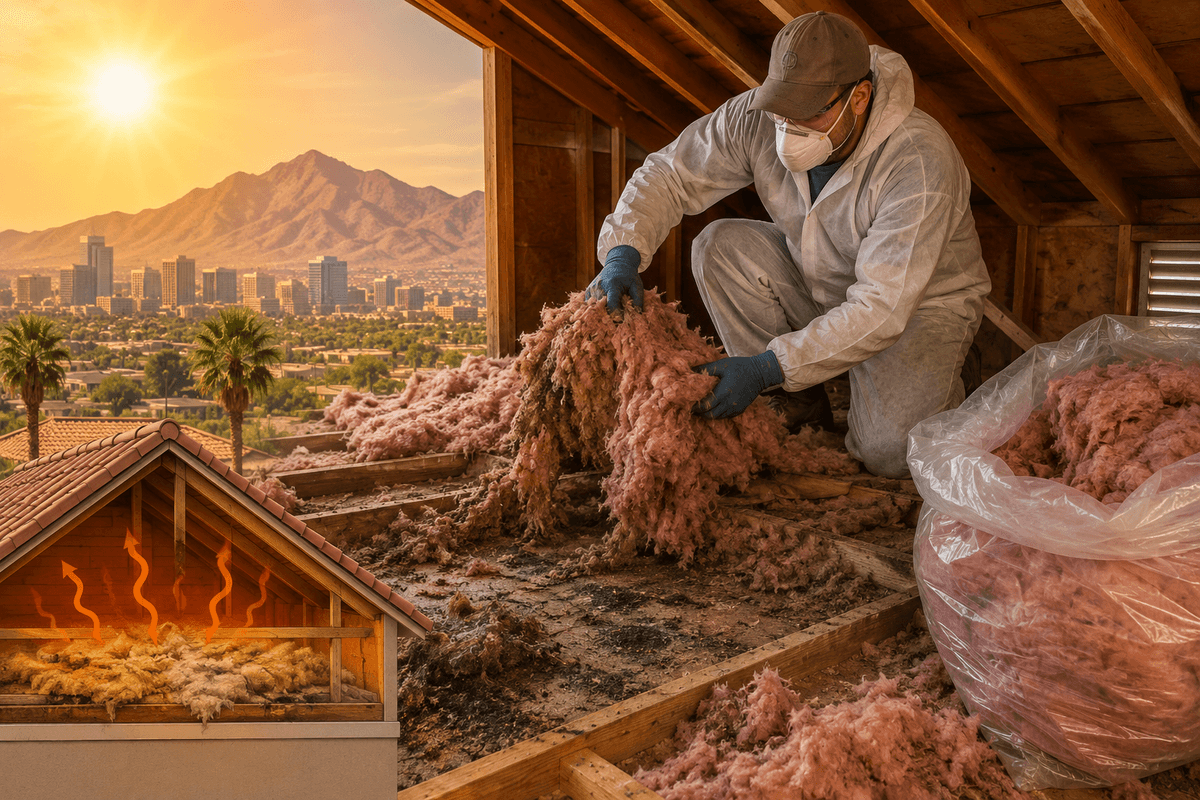
Insulation is supposed to protect your home. Over the years, it can turn into a liability instead. Old material hides problems that quietly hurt your air and your bills.
In a Phoenix attic, heat and pests speed that decline. What worked twenty years ago may be failing now. Removing it is sometimes the only real fix.
Key Takeaways
- Old insulation can trap contamination, moisture, and lost efficiency.
- Pests, water, smoke, and age are the main reasons to remove it.
- Removal plus air sealing sets up a Phoenix home for real savings.
When Old Insulation Should Come Out
Not every attic needs a full removal. But several conditions make it the right call.
Pest Contamination
Rodents and other pests love old attic insulation. They leave droppings, urine, and nesting behind. That contamination is a health risk that cleaning alone cannot fix. Removal is the safe answer.
Water Damage and Mold
A roof leak or plumbing issue can soak the insulation. Wet insulation loses its R-value and grows mold. Once that happens, drying is not enough. The material has to go.
Settled or Degraded Insulation
Insulation compresses and settles over decades. As it flattens, its R-value drops. A thin, packed layer no longer protects the home. Removal and replacement restore the protection.
Smoke or Fire Damage
After a fire, insulation absorbs smoke and soot. It holds the odor and the contamination. No cleaning removes that from the material. It needs to be taken out.
The Asbestos Question in Older Homes
Very old insulation raises a serious concern. Some vermiculite insulation from decades ago contains asbestos. The EPA warns against disturbing possible asbestos, so testing comes before any removal.
If a test is positive, licensed abatement is required. This is not a do-it-yourself job. A professional handles it safely and legally.
Why Removal Improves Air and Efficiency
Clearing out bad insulation helps more than your bills. It removes contaminants that hurt indoor air. The EPA connects better air to fewer indoor pollutants, and a clean attic supports that.
Removal also exposes hidden air leaks. Those get sealed before new insulation goes in. Optima SprayFoam serves the Phoenix service areas with that full reset.
The Removal Process
Professional removal is contained and methodical. The crew seals the work area to control dust. Then they vacuum out the old material with commercial equipment.
Next comes cleaning and any needed decontamination. Air leaks get sealed once the deck is clear. Only then does fresh insulation go in.
Signs It Is Time to Remove
A few clues point to removal over a simple top-off. Watch for these in your Phoenix attic.
- A musty smell or visible mold in the attic.
- Signs of rodents, like droppings or chewed material.
- Insulation that looks flat, packed, or water-stained.
- A home built before the 1990s with unknown insulation.
Why Phoenix Attics Attract Pests
Phoenix attics are warm, dark, and quiet. That makes them ideal for rodents and insects. Old insulation gives them nesting material. Once they move in, contamination follows.
How Wet Insulation Fails
Insulation works by trapping air. Water fills those spaces and kills the R-value. Wet material also grows mold within days. Drying rarely restores it fully.
Vermiculite and the Asbestos Risk
Vermiculite insulation looks like small pebbles. Some older batches contain asbestos fibers. Disturbing it can release those fibers. Testing first is the only safe move.
Removal Plus Air Sealing
Removal opens up a rare chance. With the attic clear, air leaks are easy to find. Sealing them before reinsulating pays off for years. The two steps work best together.
What Happens to the Old Material
Removed insulation is bagged and hauled away. Contaminated material is handled with care. Proper disposal keeps the mess out of your home. A good crew leaves the space clean.
Health Reasons to Remove
Some attic problems are health issues, not comfort ones. Rodent waste and mold affect the air you breathe. Smoke residue does the same after a fire. Removal protects the household.
Efficiency Reasons to Remove
Failing insulation quietly raises your bills. A settled, thin layer barely slows the heat. Your air conditioner works harder to compensate. Fresh insulation reverses that.
How Long Removal Takes
Most attic removals finish in a day or so. Size and contamination affect the timeline. Asbestos abatement adds time and steps. A crew gives an estimate after inspecting.
DIY vs. Professional Removal
Removal is dusty, hot, and physical work. Contaminated material adds real risk. Professionals have the vacuums, gear, and disposal plan. In a Phoenix attic, that matters.
Planning Your Reinsulation
Removal is step one of a bigger project. Air sealing and new insulation follow. Choosing the right material sets the R-value. A clear plan turns a problem attic into an asset.
Preventing Future Insulation Problems
A good reinsulation is easier to protect. Seal pest entry points around the attic. Fix roof and plumbing leaks quickly. Regular checks catch trouble before it spreads.
Frequently Asked Questions
Is it worth removing old insulation?
Often yes, when it is contaminated or wet. Settled insulation that lost its R-value also qualifies. Removal clears the way for a proper reinsulation.
Does old insulation contain asbestos?
It can, especially older vermiculite. Testing is the only way to know for sure. Never disturb suspect insulation before it is tested.
What is the best way to remove insulation?
Professionals contain the attic and vacuum out the material. Then they clean and seal air leaks. New insulation goes in last.
Can I just add new insulation on top?
Sometimes, if the old material is clean and dry. If it is contaminated or wet, no. Adding over a problem only buries it.
How do I know if removal is needed?
Look for mold, pests, or water stains. A flat, packed layer is another sign. An attic inspection settles the question.
Is Your Old Phoenix Insulation Hurting You?
Old insulation can quietly cost you air quality, comfort, and money. When it is contaminated or failing, removal is the honest fix. A clean, sealed attic is the foundation for everything that follows.
Optima SprayFoam removes bad insulation and resets your attic the right way. When you are ready, reach out to get started.